
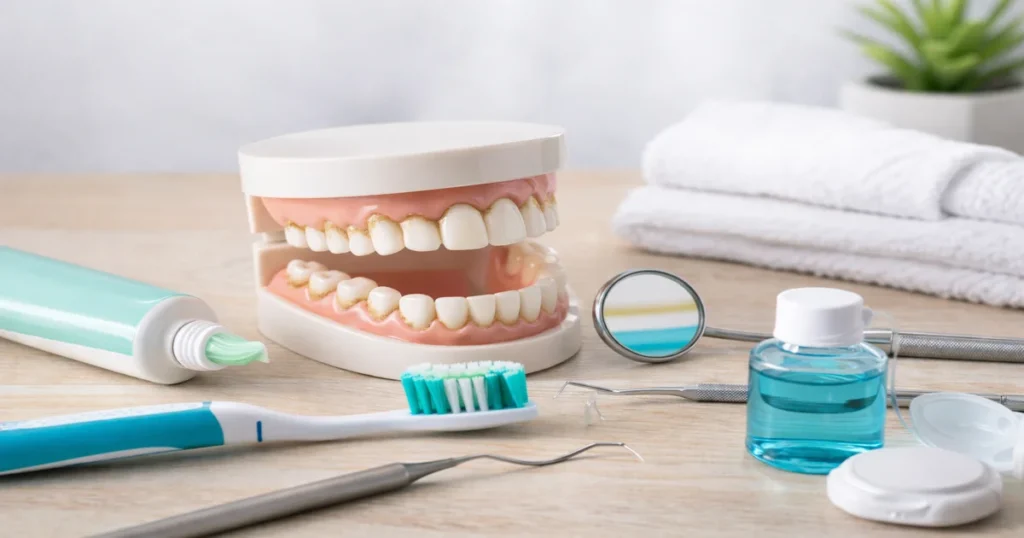
Many people search for ways to remove plaque and tartar at home after noticing rough deposits near the gumline or between teeth. While daily oral care plays a major role in overall dental hygiene, preventing buildup, not everything you see can, or should, be removed at home.
In this article, we clarify the difference between plaque and tartar, explain which home methods are safe and effective, highlight dangerous DIY trends to avoid, and outline when professional dental care becomes necessary to protect enamel and gum health.
What Plaque and Tartar Are
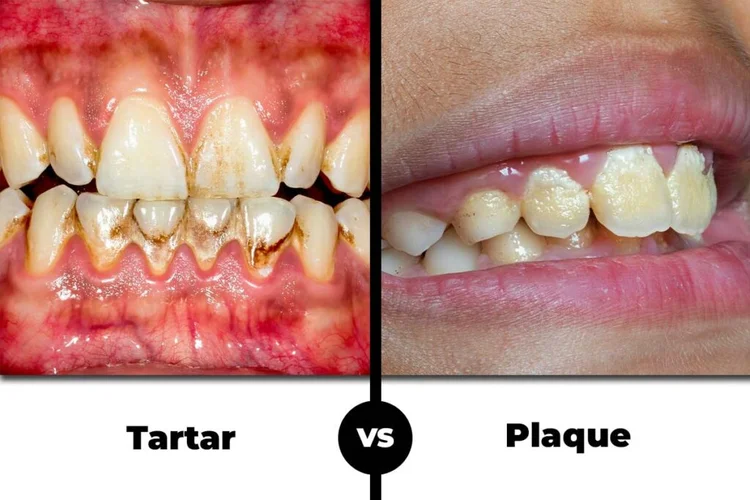
Plaque is a soft, sticky oral biofilm made up of bacteria, food debris, and saliva. It forms continuously on teeth and along the gumline and can be removed daily with proper brushing and flossing. If plaque is not disrupted regularly, it absorbs minerals from saliva and hardens into tartar, also known as dental calculus.
Tartar is firmly bonded to tooth surfaces and cannot be removed with brushing alone. Its rough texture attracts more plaque and irritates the gums, increasing the risk of gingivitis and gum disease. This process explains why some people notice buildup even when they brush consistently; technique, timing, and interdental cleaning all play critical roles.
Safe Ways to Reduce Plaque Buildup at Home
Reducing plaque at home is both safe and effective when the right methods are used consistently. The goal is to disrupt biofilm before it hardens.
Proper brushing technique
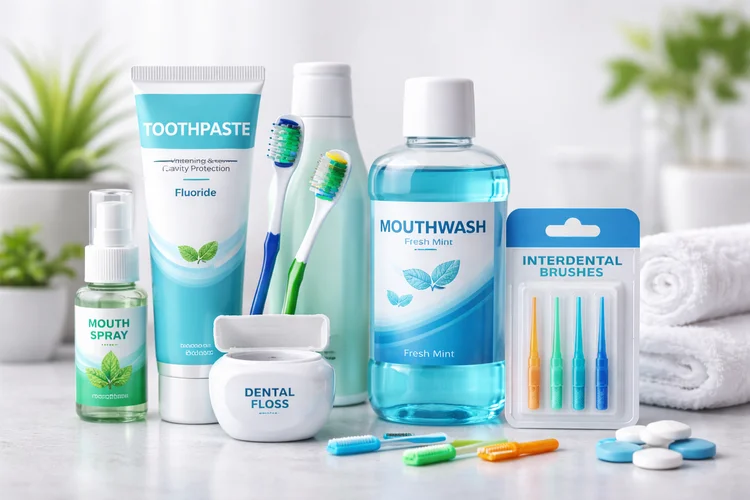
Brushing twice daily with a soft-bristled toothbrush removes plaque from exposed tooth surfaces. Gentle, angled brushing along the gumline is more effective than aggressive scrubbing, which can damage enamel.
Electric toothbrush use
Electric toothbrushes are especially effective at disrupting plaque due to their consistent motion and pressure control. Many patients see improved gum health after switching from manual brushing.
Daily flossing
Flossing removes plaque between teeth where brushes cannot reach. Interdental plaque is one of the most common sources of gum inflammation and cavities.
Read more: Do you really need to floss?
Interdental cleaning tools
Interdental brushes or water flossers help clean larger spaces, around dental work, or in areas prone to plaque accumulation.
Tartar-control toothpaste
These toothpastes help slow mineralization of plaque, reducing how quickly tartar forms, but they do not remove existing tartar.
Read more: Best Toothbrush for Adults
What You Can and Cannot Do About Tartar at Home
It is important to understand that tartar cannot be safely removed at home once it has hardened. Toothpastes, rinses, and tools marketed as “tartar removers” only help prevent new buildup; they do not detach existing calculus.
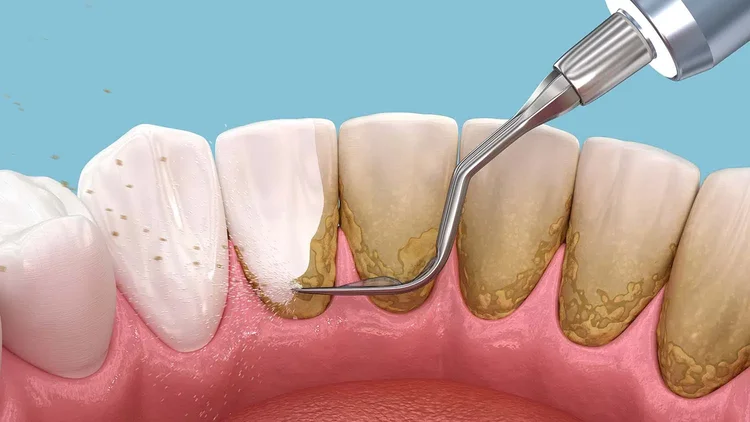
Attempting to scrape tartar yourself risks scratching enamel and injuring gums. Once enamel is damaged, it cannot regenerate. Removing tartar safely requires professional instruments as part of general dentistry care.
Home care plays a preventive role, not a corrective one, when tartar is present.
Here is also a super important point brought to you by Colgate:
“Once plaque hardens into tartar, a toothbrush can’t remove it. You may be tempted by “do it yourself” tartar-removal products, like dental tool kits or “natural” remedies, such as strawberries, vinegar, or sesame seeds. While these ingredients and products are readily available at any local grocery or pharmacy, we recommend speaking with your dentist about removing tartar rather than attempting at-home methods.”
Dangerous DIY Methods You Should Avoid
Some viral or DIY methods promise fast tartar removal but can cause lasting harm:
- Scraping teeth with metal tools or picks
- Using baking soda aggressively or frequently
- Applying lemon juice, vinegar, or acidic mixtures
- Using hydrogen peroxide undiluted
- Attempting to “chip off” tartar
These methods lead to enamel erosion, gum recession, sensitivity, and increased risk of decay. Dentists frequently see damage from DIY attempts that later require restorative dentistry to repair weakened teeth.
When Home Care Isn’t Enough and a Dental Cleaning Is Needed
If you notice hardened deposits, persistent gum bleeding, bad breath, or rough buildup that does not brush away, professional care is needed. These signs indicate tartar accumulation below or along the gumline.
During a professional cleaning, a hygienist safely removes tartar using specialized instruments, restoring smooth tooth surfaces and reducing bacterial irritation. Delaying care allows inflammation to progress, sometimes requiring periodontics or even tooth extractions in advanced cases.
Routine professional cleanings combined with strong home care offer the best long-term protection.
Protect Your Enamel by Using Safe Methods.
At Lawrence Dental Centre, our team provides professional care to safely remove tartar and prevent problems. If you’re noticing buildup you can’t remove at home, booking an appointment can help stop damage before it starts.
Keep Your Teeth Healthy and Remove Plaque and Tartar at Home
Plaque can be safely controlled at home with proper brushing, flossing, and interdental cleaning. Tartar, however, cannot be removed without professional care, and attempting to do so can cause permanent damage.
At Lawrence Dental Centre, we help Toronto patients prevent plaque buildup and safely manage tartar through comprehensive preventive care. Knowing the limits of home methods protects your teeth and gums in the long term.
FAQ
Can tartar really be removed at home?
No. Once plaque hardens into tartar, it can only be removed professionally.
Does baking soda safely remove plaque?
In moderation, it may help with surface plaque, but frequent use can damage enamel.
Are electric toothbrushes better for plaque control?
Yes. They consistently remove more plaque than manual brushes for many patients.
Can plaque come back even if I brush and floss daily?
Yes. Plaque forms continuously, which is why daily care and regular cleanings are essential.
Have you ever tried removing tartar at home?
Share your experience or questions below.
